The family had long been prosperously settled in Huntingdonshire. If they were notable at all, it was for a habit of not distinguishing themselves; and as no firmer warrant for respectability could be imagined, they continued to enjoy the widespread esteem of their acquaintance, to be buried with due formality in the vault at Wythorpe church when they died, and to be absolutely forgotten straight afterwards.
Caroline did not lack for partners in the succeeding dances, and one flushed young man who had drunk too much wine repeatedly informed her, with more gallantry than exactitude, that she was a magnificent Tigress. It was partly to escape the attentions of this zoological gentleman that she withdrew to the card room.
This definitely started off slowly and it took me some time to get reconciled to the idiosyncrasies of the writing. Obviously influenced by Georgette Heyer’s incorporation of the dialect and words of the era, it seemed a little try-hard.
Mrs Catling’s personal maid— a little pinched comfit-chewer with a look of settled, not to say lifelong discontent.
It took me a bit to get used to the cadences and the wordsmithing, but once I did, I appreciated the quality of the writing, for sure.
Mr Leabrook seemed to find nothing in her silence or awkward looks to disconcert him, however; and proceeded in his soft yet precise voice, like the purposeful padding of cat’s feet.
He still tended to speak too partially of his own feelings, and to suppose that his idiosyncrasies were of necessity interesting; whereas she could not be convinced, even by ever so emphatic a manner, that a violent dislike of onion-sauce called for any special comment, still less admiration. But he was sincere and well-meaning, of that she was sure; and she felt for his difficult situation. Indeed, it was this that made Caroline his partisan.
He was one of the few men she had seen who suited the fashionable Windswept style that his thick black hair was dressed in— perhaps because he seemed always caught in a gust of emotion.
He never uses a common word when a more obscure one will do, but that didn’t bother me and my vocabulary appreciated it.
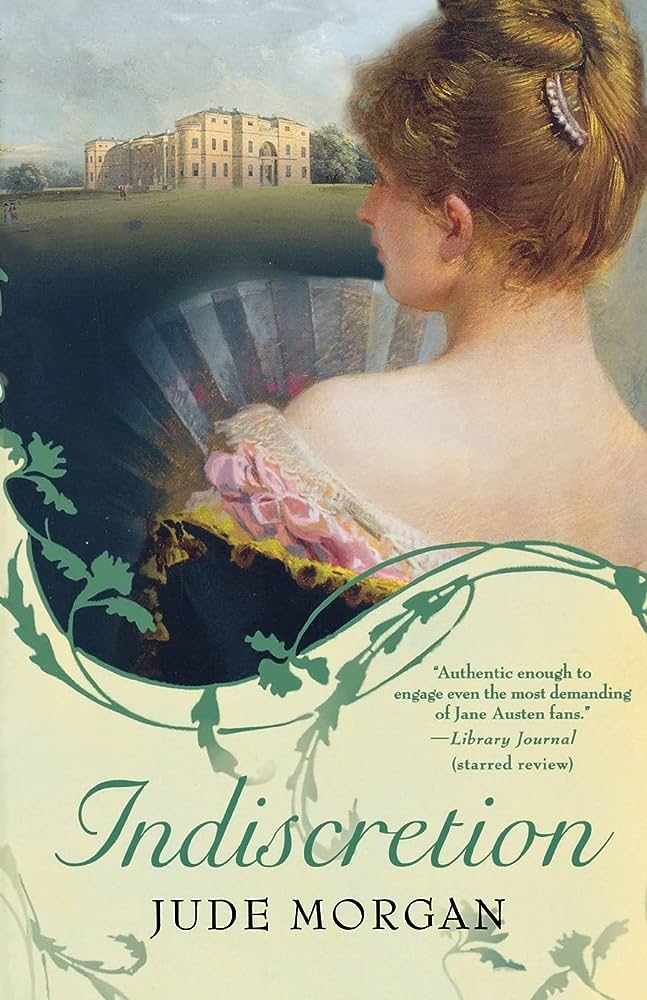
We follow in our 20-year-old heroine Caroline Fortune’s wake as she navigates through three distinct spheres of the Regency World, always doing so with grace, humor, kindness, and common sense. We first meet her as the loving but frustrated sole companion of her father and living in a seedy section of London. They are devoted to each other but are destitute thanks to her handsome father’s irresponsibility with what little income they have from his military pension. Her mother is eight years dead. She came from a respectable and well-off family but was disowned when she followed her heart and married Captain Fortune, itinerant actor, and former military man.
One step ahead of Debtor’s Prison and desperate to save his daughter, Captain Fortune secures a paid position for her as the companion to the widow of his old Colonel, Mrs. Catling, an old battleaxe if ever there was one. He escapes to Bath as Caroline settles in Brighton with her new employer. She meets and becomes friendly with Mrs. Catling’s niece and nephew who visit her frequently and are dependent on her financially to maintain their semi-fashionable lifestyle. She also becomes friendly with their friend, Mr. Leabrook, a handsome and smooth wealthy landowner who shows every indication of admiring Caroline very much. Unfortunately, he eventually proves to be not the paragon he first appears to be. Our heroine rubs along very well thanks to her composure in dealing with Mrs. Catling’s ways. Her situation changes once again about a third of the way through the book when she receives word of her father’s reconciliation with her late mother’s sister and her husband but also his unfortunate sudden demise. When Mrs. Catling refuses to allow her time off to attend her father’s funeral, she quits, and we follow her to the third and last stop on her journey: her life with her loving Aunt and Uncle in the country parish where he is the rector. It is at this point that the book really picked up for me. It was just such a relief to have the deserving Caroline find a safe haven.
She had moved amongst many circles in her life, some clever, some stupid, some moneyed, some threadbare, but all more or less sophisticated, and not inclined to expect much virtue in others, or to cultivate it in themselves. It came as a revelation, not quite commensurate with the proven existence of the fairies, but almost as charming and bewildering, that all the time there had been this other race of beings: kind, gentle, reliable, unworldly.
It is there that she meets and becomes close to the aristocratic Milner family particularly Isabella, of her own age, who becomes her good friend. Besides Isabella’s bossy and abrasive stepmother and her Navy Captain cousin, that household also includes Isabelle’s free-thinking and unconventional younger sister Fanny and her eccentric brother Stephen who would rather be exploring archaeological sites than staying home tending to his business there. To Caroline’s dismay, she also learns that Isabella’s oft-spoken-of but temporarily absent-from-home fiance is none other than the morally suspect Mr. Leabrook.
The book is dense with intrigues and subplots, but the main strength of this book is the characterizations. All of those who revolve around Caroline were extremely well drawn with many layers and complexities and amusingly described.
She was a garrulous woman who had long been listened to with rather too much indulgence, and who was a little too inclined to consider herself a Character, on no greater evidence than a continual compulsion to talk about herself, and some large rings.
Many turned out to be quite different from what they at first seemed. Mrs. Catling first came across as a prototypical curmudgeonly old dragon: tough and demanding but admirable in her own way. By the end of our time with her she has proven to be just nasty and mean.
As to why Mrs Catling should play this unpleasant game, perhaps no further reason needed to be sought than that it gave her pleasure to meddle, mar, and hurt: this human propensity not being so uncommon as ever to excite surprise when detected.
Two of the characters owe a good bit to Jane Austen’s Colonel Brandon and Lydia Bennett. But they don’t start out that way. Another character starts out to be very unsympathetic and cold but proves her mettle when the chips are down. The character of the hero surprisingly was a problem for me. He was obviously intelligent, even intellectual, yet his conversation, particularly with Caroline was often silly and prattling with no purpose other than to amuse himself and call attention to his “wit” and famous quirkiness. But then, perhaps he was nervous around her? Even our heroine has to tell him to just shut up at one point near the end despite her love for him and their mutually enjoyable banter.
I definitely recommend this book to those who have read and re-read Jane Austen and Georgette Heyer, but crave some fresh delights. But a modicum of patience might be required and a few weaknesses overlooked. Lord, I guess a bit of Jude Morgan has rubbed off on me.
It’s different from other things I’ve seen and it’s short and I think you’ll like it. Can you believe Duke beat Clemson? If you look at the box score Clemson won every single category. Duke even lost two fumbles. I am so ready for basketball.
This is the sort of thing I was thinking about, making her easier to read, but I accepted your point and agreed.
Writer Gill Tavner, who has adapted all six of Jane Austen’s novels into short stories for readers of 8 years and upwards for publisher Real Reads, didn’t read anything by Jane Austen until she too studied Emma for A-level. ‘I don’t think there can be an ideal age for first reading Pride & Prejudice or any other novel. I always thought Northanger Abbey was the most accessible for younger readers, but I’m less certain now. My own ten year old, having so far only encountered Jane Austen through Real Reads, talks most enthusiastically about Pride & Prejudice and Sense & Sensibility.
The Real Reads Austens are winningly illustrated and sensitively retold. But why not just wait a few years and start with the original novels as John Mullan advocates? ‘That’s a valid argument’, concedes Tavner, ‘But perhaps we can look at this in another way. What if a younger reader, having seen a TV adaptation of film, or simply having heard about Jane Austen, wants to read one of her books but would be daunted by the original? In such a case, to introduce an accessible, shortened version in which Jane Austen’s style is effectively imitated and in which her characters, plot, themes and social concerns are faithfully reflected is surely a sensible approach. Our aim with Real Reads is to whet young readers’ appetites for the originals and to give them the confidence to read them when they are ready. Feedback tells us that some have developed a very early love for the writer, and I’m very pleased by that’.
Classic Comics? By the way, I finally saw a movie you recommended, The Quiet Girl. I really liked and admired it, but I wanted happy tears at the end, not the tears I shed, and closure. I generally don’t like movies that leave it up to the viewer to figure out what happens next. but I’m glad I saw it.
Rest assured that if there were the slightest, even one in a billion chance that she was returned home I wouldn’t have recommended it to you in a million years. Plus I would have killed myself. 🙂 The father would have been delighted and I would expect some money to change hands wouldn’t you? The point was made that they didn’t care if she stayed. Don’t scare me like that. Wasn’t that child remarkable; her first movie. I think I’ll get some beer and watch it again, I haven’t teared up yet today.
I do what I can! 🙂 It was the look on his face that was so disturbing wasn’t it, but there’s no way he was going to make an issue out of her coming back. My heart went out to that child. This movie really stuck with me. So glad you liked it. I knew you would.
 Rebekah's Readings and Watchings
Very thorough review, as always. Lawd, I don’t know when you have time to read all these books!
LikeLike
If only I had more serious taste in reading think where I’d be!
LikeLiked by 1 person
I wanted to share this and didn’t know where to put it. Lyrical.
LikeLiked by 1 person
looks interesting! Thanks again.
LikeLiked by 1 person
It’s different from other things I’ve seen and it’s short and I think you’ll like it. Can you believe Duke beat Clemson? If you look at the box score Clemson won every single category. Duke even lost two fumbles. I am so ready for basketball.
LikeLike
Definitely mixed feelings about their defeat
LikeLike
Probably enshrined somewhere deep in Academe.
LikeLike
This is the sort of thing I was thinking about, making her easier to read, but I accepted your point and agreed.
Writer Gill Tavner, who has adapted all six of Jane Austen’s novels into short stories for readers of 8 years and upwards for publisher Real Reads, didn’t read anything by Jane Austen until she too studied Emma for A-level. ‘I don’t think there can be an ideal age for first reading Pride & Prejudice or any other novel. I always thought Northanger Abbey was the most accessible for younger readers, but I’m less certain now. My own ten year old, having so far only encountered Jane Austen through Real Reads, talks most enthusiastically about Pride & Prejudice and Sense & Sensibility.
The Real Reads Austens are winningly illustrated and sensitively retold. But why not just wait a few years and start with the original novels as John Mullan advocates? ‘That’s a valid argument’, concedes Tavner, ‘But perhaps we can look at this in another way. What if a younger reader, having seen a TV adaptation of film, or simply having heard about Jane Austen, wants to read one of her books but would be daunted by the original? In such a case, to introduce an accessible, shortened version in which Jane Austen’s style is effectively imitated and in which her characters, plot, themes and social concerns are faithfully reflected is surely a sensible approach. Our aim with Real Reads is to whet young readers’ appetites for the originals and to give them the confidence to read them when they are ready. Feedback tells us that some have developed a very early love for the writer, and I’m very pleased by that’.
LikeLiked by 1 person
Classic Comics? By the way, I finally saw a movie you recommended, The Quiet Girl. I really liked and admired it, but I wanted happy tears at the end, not the tears I shed, and closure. I generally don’t like movies that leave it up to the viewer to figure out what happens next. but I’m glad I saw it.
LikeLiked by 1 person
Rest assured that if there were the slightest, even one in a billion chance that she was returned home I wouldn’t have recommended it to you in a million years. Plus I would have killed myself. 🙂 The father would have been delighted and I would expect some money to change hands wouldn’t you? The point was made that they didn’t care if she stayed. Don’t scare me like that. Wasn’t that child remarkable; her first movie. I think I’ll get some beer and watch it again, I haven’t teared up yet today.
LikeLike
I’m glad you are so sure. I wasn’t. The way he came after her. But now I will believe that is what happened.
LikeLiked by 1 person
I do what I can! 🙂 It was the look on his face that was so disturbing wasn’t it, but there’s no way he was going to make an issue out of her coming back. My heart went out to that child. This movie really stuck with me. So glad you liked it. I knew you would.
LikeLiked by 1 person