by Marian Keyes

But the point I’m making is I wasn’t playing it safe when I married Garv, This is the way I really am!”
Plain yoghurt at room temperature?”
“Um…”
Plain yoghurt at room temperature and proud of it?” “…With Raspberry puree at the bottom?”
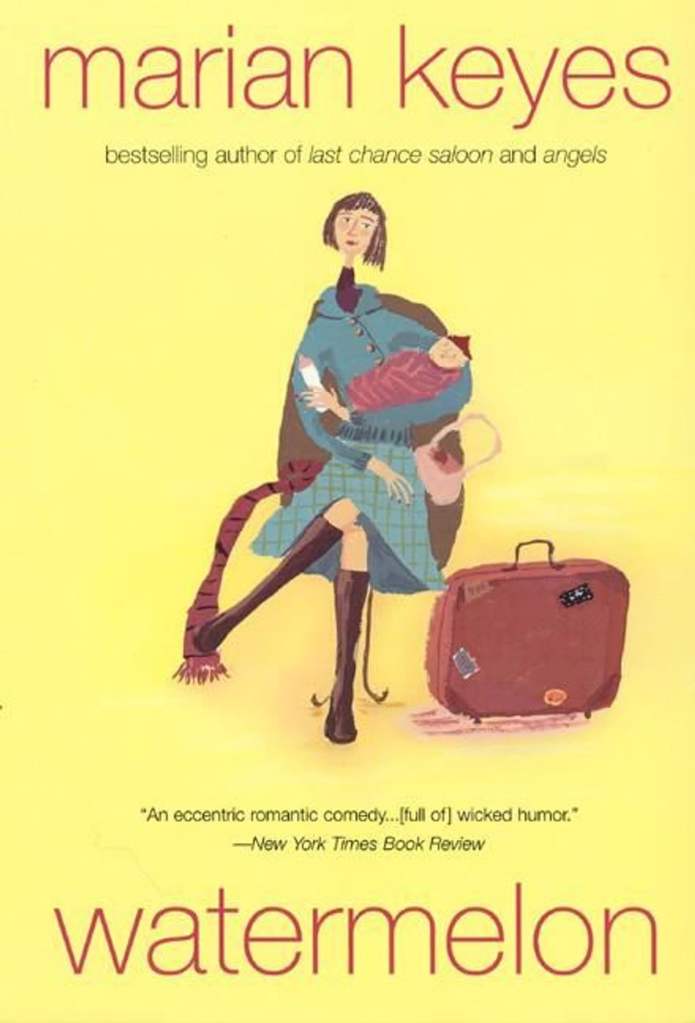
Yes! I might even get a T-shirt saying it” “Two. One for Garv as well.”Had I read the Walsh Family Chronicles in order I would have probably looked upon Maggie’s story as a relief after Claire’s marriage drama and Rachel’s hard-fought and very entertaining journey out of denial and into sobriety. I don’t remember too much about how I felt about it on my first read, by which time I was well into Marian Keyes’ oeuvre, which included many of her standalone novels. When I came to my second Walsh novel, at first I didn’t even realize I had read about these characters before. I remember I liked Angels better than most people did. This time on Audible, I liked it pretty well. After reading all of the Walsh sisters’ stories including sequels, I was very familiar with how the rest of her family view Garv and Margaret. I was interested in how Keyes would find much fodder in the boring life of boring Maggie and her even more boring husband Garv. He is accepted only grudgingly in the first go-round with the Walshes. Except Anna, and that’s a whole other story. They love and respect Margaret but she is somewhat of an outsider, being sensible, responsible, and stable compared the rest of the family’s batshit-in-a-blender lives and times. As I got to know Maggie and learned about her life, I realized she was no different from the usual likable, funny, and good-hearted heroines of Women’s Fiction or Romantic Comedies. She was “every woman” and not boring at all.
After she finds out her husband has cheated on her and she is fired from her job, Maggie flees from Ireland to Los Angeles to visit her best friend Emily. As the white sheep of the family who never strays from the straight and narrow, this unexpected turn of events is quite the shocker. As Maggie experiences life in California and meets many of their strange peoples, we also learn a little more about her teen years, her first love, Shay Delaney, whom she has never quite gotten out of her system, her happy marriage to Garv, and what has caused their marriage to fracture and then break. Her life there with her friend Emily, a struggling scriptwriter, is one curveball after another. But nothing of lasting importance happens to her there in Los Angeles, and most of the book is about Maggie meeting and interacting with various Los Angeles stereotypes. It has even less of a plot than Watermelon. She also meets Shay there, but there is no fear that he will be any more important in her future than the rest of the other large cast of characters. By that time, we understand what a wonderful man Garv is, how happy they both were in their marriage, and how much Maggie still loves him. But he doesn’t show up in the book live and in person until the 95% mark. By this point, I was half in love with myself and I was very happy to see him, hear his side of the story, and have him get Maggie away from her well-meaning but overbearing family. Yes, Mammy Walsh, Mr. Walsh, Anna, and Helen show up in L.A. late in the book and bring their own special brand of crazy and hilarious to the unsuspecting Angelenos. Most of the book is an affectionate send-up of Hollywood culture seen through Maggie’s Irish eyes. The only real people of any depth were her old friend Emily and her new friend Laura. Some of the book is quite dated and exaggerated, though there is also a lot of truth in it, I imagine.
I didn’t love it but I liked it, and I also enjoyed Gerry Halligan’s reading even if the accents of the American characters seemed a little exaggerated and “off.” Weirdly, she pronounced Rodeo drive like it was a cowboy contest and “4-1-1” as 4-eleven. Even those little quirks had their charms.





 Rebekah's Readings and Watchings